OUR SERVICES
Audio, Visual and Lighting PAT Testing
Specialist PAT testing for bands, theatres, recording studios, live events, venues and production companies.
BANDS • THEATRES • RECORDING STUDIOS • LIVE EVENTS • VENUES • PRODUCTION COMPANIES
Bands • Theatres • Recording Studios • Live Events • Venues • Production Companies
Ocean City PAT Testing provides professional Portable Appliance Testing for bands, theatres, recording studios, live events, venues and production companies across Plymouth, Devon and South East Cornwall.
AUDIO, VISUAL AND LIGHTING PAT TESTING
Why Audio and Entertainment Equipment Needs a Risk-Based Approach
Sound and audio equipment is often moved, transported, connected and disconnected repeatedly. It may be used on stages, in studios, rehearsal rooms, theatres, clubs, outdoor events and temporary installations. These environments can expose cables, plugs, connectors and equipment to mechanical damage, moisture, heat, heavy foot traffic and frequent handling. HSE provides specific electrical-safety guidance for entertainers using equipment for sound, lighting and other effects.
AUDIO, VISUAL AND LIGHTING PAT TESTING
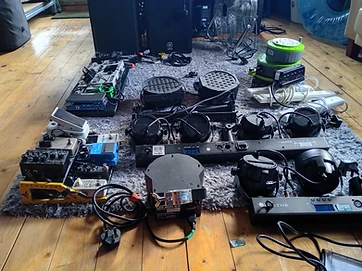
Typical Equipment
- Mixing desks and audio interfaces
- Power amplifiers and powered loudspeakers
- Passive loudspeakers and speaker cables
- Microphones, radio systems and receivers
- Guitar, bass and keyboard amplifiers
- Effects units, pedalboards and racks
- DJ equipment, controllers and media equipment
- Studio monitors, computers and recording equipment
- Stage boxes, distribution equipment, extension leads and cable reels
- Portable lighting and other production equipment where included in the electrical maintenance programme
AUDIO, VISUAL AND LIGHTING PAT TESTING
The Particular Risks of Live Sound
Repeated movement: equipment may be transported to rehearsals, venues and performances, increasing wear and the likelihood of damage. Cables underfoot: microphone, power and speaker cables can be walked on, trapped, crushed or pulled. Stage environments: equipment can be exposed to drinks, rain, condensation, heat and crowded working areas. Metalwork and exposed conductive parts: faults or incorrect connections can create dangerous touch voltages. Interconnected equipment: a fault in one item can have consequences elsewhere in a connected audio system. Microphones and instruments: HSE specifically warns that a person holding a microphone or instrument may be unable to let go if it becomes electrically live.
AUDIO, VISUAL AND LIGHTING PAT TESTING
HSE Guidance for Entertainers
HSE's Electrical safety for entertainers guidance states that faulty, damaged or incorrectly used equipment can cause injury and specifically highlights the risk of electrical shock when using sound equipment. It also notes that equipment without its own mains supply can still be dangerous in some circumstances, such as loudspeaker systems with terminals at hazardous voltages.
AUDIO, VISUAL AND LIGHTING PAT TESTING
PAT Is Part of the Maintenance System
HSE HSG107 describes effective maintenance as a combination of user checks, formal visual inspection and, where necessary, combined inspection and testing (PAT). The frequency should reflect the type of equipment, how it is used, how often it is used and where it is used. There is no blanket requirement for every item to be PAT tested annually. Important: an electrical test result is a snapshot. A cable damaged during transport or a connector damaged during a performance can become unsafe after testing. User checks before use therefore remain essential.
AUDIO, VISUAL AND LIGHTING PAT TESTING
Portable Equipment, Cables and Connectors
In sound work, the condition of cables and connectors is particularly important. Checks should include supply cables, plugs, IEC connectors, power distribution, extension leads, cable entries and the physical condition of equipment. Look for cuts, crushed sections, exposed conductors, damaged connectors, loose strain relief, damaged casings, overheating and evidence of unsuitable use.
AUDIO, VISUAL AND LIGHTING PAT TESTING
Temporary and Touring Systems
Touring bands, production companies and theatre crews may repeatedly assemble and dismantle systems. This creates a higher likelihood of mechanical damage and connection errors. Equipment should be inspected before use and after transport or significant changes where appropriate. Cable management should prevent crushing, trip hazards and unnecessary strain on connectors.
AUDIO, VISUAL AND LIGHTING PAT TESTING
Theatre and Live-Event Environments
Theatres and venues can involve temporary equipment, stage access, rigging, lighting, sound distribution and multiple organisations working together. The electrical maintenance arrangements should clearly identify who is responsible for the equipment and how defects are reported, isolated and dealt with before equipment is returned to service.
AUDIO, VISUAL AND LIGHTING PAT TESTING
PUWER and Other Work-Equipment Considerations
Where sound or production equipment is work equipment used by employees, the Provision and Use of Work Equipment Regulations 1998 (PUWER) may also be relevant. PAT does not demonstrate that equipment is safe in every respect. Suitability, maintenance, inspection and safe use need to be considered where applicable.
AUDIO, VISUAL AND LIGHTING PAT TESTING
Fixed-Wired and Specialist Equipment
Some venue and studio equipment may be permanently connected to the electrical installation or form part of a larger distribution system. Where inspection or testing requires access to fixed wiring, safe isolation or other electrical work, it should only be undertaken by a person competent and trained for that work. Professional boundary: a PAT technician should work within their training, competence, equipment and safe working procedures. Fixed-wired equipment, specialist distribution systems or work requiring safe isolation should be referred to an appropriately competent electrical professional where necessary.
AUDIO, VISUAL AND LIGHTING PAT TESTING
What a Well-Managed Audio Operation Should Have
- User/pre-use checks before equipment is connected and used
- Formal visual inspection at appropriate intervals
- Electrical testing where justified by risk and carried out by a competent person
- Particular attention to equipment that is toured, transported or used outdoors
- Clear identification and removal of defective cables, connectors and equipment
- Appropriate storage and transport arrangements to prevent damage
- Suitable records of inspection, testing, defects and remedial action
- Clear responsibility for equipment ownership, maintenance and defect reporting when several organisations share a venue
AUDIO, VISUAL AND LIGHTING PAT TESTING
Key Message for Bands, Venues and Production Companies
PAT is not simply a yearly sticker exercise. In live sound and entertainment, equipment is frequently moved, interconnected and exposed to demanding environments. Electrical safety should therefore be managed using user checks, appropriate inspection and testing, good cable management, prompt removal of defective equipment and clear responsibility for maintenance. General guidance for entertainment and audio businesses in England. This document is not a substitute for legal advice, a full electrical installation assessment, event safety planning or specialist electrical work. HSE guidance should be considered for the specific equipment, venue and working conditions.


WHY CHOOSE OCEAN CITY PAT TESTING
Why Choose Us
GUIDING YOU SAFELY
Need audio, visual and lighting pat testing?
Get in touch with Ocean City PAT Testing today to discuss your requirements or arrange a professional service.