OUR SERVICES
Holiday Let PAT Testing
Protect your guests and meet short-let safety requirements with thorough appliance testing across your holiday let.
PROTECTING YOUR GUESTS, YOUR PROPERTY AND YOUR BUSINESS
Protecting Your Guests, Your Property and Your Business
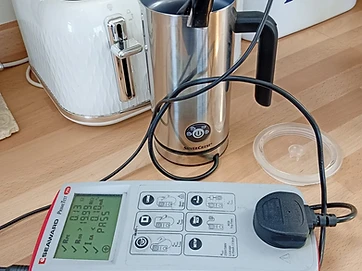
Ocean City PAT Testing provides professional PAT testing for holiday lets, Airbnb properties and short-term accommodation across Plymouth, Devon and surrounding areas.
HOLIDAY LET PAT TESTING
Duty of Care
Holiday let owners and operators have a duty of care to provide accommodation that is safe for their guests to use. Regular visual inspections, appropriate risk-based PAT testing, prompt removal of faulty or potentially unsafe appliances, and accurate records of inspections, testing and remedial action can all help demonstrate that electrical safety is being responsibly managed.
HOLIDAY LET PAT TESTING
Inspection and Testing
The frequency and extent of inspection and testing should be appropriate to the type of equipment, how and where it is used, and the conditions to which it is exposed.
HOLIDAY LET PAT TESTING
More Than a PAT Test Certificate
Good electrical safety management is not simply about having a PAT test certificate. It is about taking reasonable steps to identify electrical risks, dealing with defects and maintaining evidence that those risks are being properly managed. Electrical safety is an ongoing responsibility — not simply a test carried out at a set interval.
HOLIDAY LET PAT TESTING
An Important Distinction
Holiday-let owners and residential landlords do not necessarily have exactly the same legal duties. A short-term holiday let is generally different from a residential tenancy where the property is occupied as the tenant's home. However, holiday-let owners still have responsibilities for managing safety and the risks presented to paying guests.
HOLIDAY LET PAT TESTING
Government Guidance Specifically Covers Holiday Lets
GOV.UK guidance published in March 2026 for people letting self-catering holiday accommodation in England specifically includes an electrical-safety section. It directs holiday-let operators to HSE electrical-safety guidance and Government guidance on electrical safety standards.
HOLIDAY LET PAT TESTING
1. Occupiers' Liability Act 1957
Section 2 establishes a common duty of care owed by an occupier to visitors. In general terms, the occupier must take such care as is reasonable in all the circumstances to see that visitors are reasonably safe while using the premises for the purposes for which they are invited or permitted to be there. Practical implication: a holiday-let owner should consider foreseeable risks to guests and take appropriate steps to manage them, including electrical risks.
HOLIDAY LET PAT TESTING
2. Regulatory Reform (Fire Safety) Order 2005
Paying guest accommodation can fall within the Fire Safety Order. The Government's small paying-guest accommodation guidance is specifically intended to help responsible persons comply with fire-safety law and includes self-catering accommodation.
HOLIDAY LET PAT TESTING
3. Government Electrical-Safety Guidance for Paying Guest Accommodation
The Government's fire-safety guidance states that electrical equipment and wiring are common causes of fire and says suitable measures should be taken to reduce the risk. It states that electrical wiring should be checked by a qualified contractor and that the electrical installation should be inspected and tested at least every five years. It also says electrical appliances should receive regular checks to ensure they remain safe, and that a visual check should be carried out between lets to ensure appliances appear to be in good condition. The guidance also recommends periodic in-house service and testing of electrical appliances in bed and breakfast and similar accommodation in accordance with the IET Code of Practice for In-Service Inspection and Testing of Electrical Equipment. Suitable records of testing and maintenance should be kept, either in a log book or electronically.
HOLIDAY LET PAT TESTING
4. Electrical Safety Standards in the Private Rented Sector (England) Regulations 2020
These Regulations require landlords covered by them to have electrical installations inspected and tested at least every five years by a qualified person. The Government's current guidance also explains requirements for electrical equipment provided by social landlords. Important: these private/social rented-sector regulations should not simply be described as a universal PAT-testing law for holiday lets. Whether a particular holiday arrangement falls within the private rented-sector regime depends on the nature of the letting and the applicable legal definitions.
HOLIDAY LET PAT TESTING
5. Electrical Equipment (Safety) Regulations 2016
These regulations principally concern the safety of electrical equipment placed on the GB market, with duties applying to relevant manufacturers, importers and distributors. They are not a PAT-testing regulation for holiday-let owners. Nevertheless, owners should take sensible steps to ensure equipment supplied for guest use is suitable and safe.
HOLIDAY LET PAT TESTING
6. Consumer Protection and Product Safety
Product-safety legislation can also be relevant where unsafe equipment causes harm. For holiday-let owners, this reinforces the wider principle that equipment supplied for guests should be appropriately selected, maintained and removed from service when it is unsafe.
HOLIDAY LET PAT TESTING
What Does This Mean for a Holiday-Let Owner?
The strongest message is not that every appliance must automatically be PAT tested every year. Instead, electrical safety should be actively managed using an approach appropriate to the equipment, its environment, how it is used and the risks involved.
HOLIDAY LET PAT TESTING
Good Electrical-Safety Management Should Include
- Visual inspection of appliances, including checks between lets
- Appropriate inspection and testing of electrical equipment
- Inspection and testing of the electrical installation by a competent person at appropriate intervals
- Prompt removal of defective or potentially unsafe appliances from service
- Maintenance in accordance with manufacturers' instructions
- Checking relevant product recalls
- Keeping suitable records of inspections, testing, defects and remedial action
HOLIDAY LET PAT TESTING
PAT Testing Is Part of the Process — Not the Whole Process
A PAT test certificate should not be treated as proof that an appliance remains safe indefinitely. An appliance can become unsafe after it has been tested. A visual inspection or a change in condition can identify a problem that requires the appliance to be removed from service regardless of when it was last tested.
HOLIDAY LET PAT TESTING
Key Message for Holiday-Let Owners
Providing safe accommodation is an ongoing responsibility. Electrical safety is best managed through a combination of appropriate inspection, risk-based testing, maintenance, prompt action when defects are found, and accurate records. Information prepared for general guidance. It is not a substitute for legal advice or a formal electrical or fire-risk assessment. Requirements can vary according to the type and circumstances of the accommodation.



WHY CHOOSE OCEAN CITY PAT TESTING
Why Choose Us
GUIDING YOU SAFELY
Need holiday let pat testing?
Get in touch with Ocean City PAT Testing today to discuss your requirements or arrange a professional service.