
OUR SERVICES
Landlord PAT Testing
Keep your rental properties compliant and your tenants safe with professional PAT testing for all supplied appliances.
PROTECTING YOUR TENANTS, YOUR PROPERTY AND YOUR INVESTMENT
Protecting Your Tenants, Your Property and Your Investment
Ocean City PAT Testing provides professional Portable Appliance Testing for landlords and property owners across Plymouth, Devon and South East Cornwall.
LANDLORD PAT TESTING
Why Should Landlords Have Appliances PAT Tested?
Although PAT testing is not a specific legal requirement for every rented residential property, landlords have a responsibility to ensure that electrical appliances they provide are safe. Professional PAT testing can be an effective way of identifying potential faults and demonstrating that electrical safety has been actively managed.
LANDLORD PAT TESTING
Risks PAT Testing Can Help Reduce
- Electric shock
- Electrical burns
- Fire
- Property damage
- Injury to tenants or visitors
LANDLORD PAT TESTING
Appliances Commonly Tested
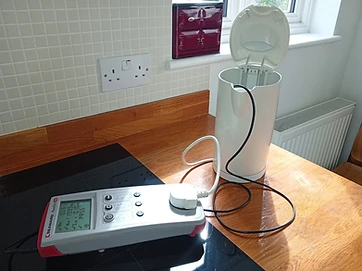
- Kettles
- Toasters
- Microwaves
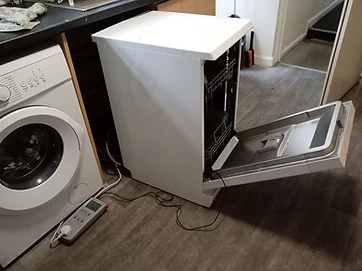
- Washing machines
- Tumble dryers
- Dishwashers
- Refrigerators and freezers
- Vacuum cleaners
- Lamps
- Extension leads
- Television equipment
- Portable heaters
- Fans
- Kitchen appliances
- Chargers and power supplies
LANDLORD PAT TESTING
What You Receive
- Professional inspection and testing
- Clear pass/fail labelling
- Comprehensive electronic test reports
- Records of failed appliances
- Advice regarding damaged or unsafe equipment
LANDLORD PAT TESTING
PAT Testing for Rental Properties
PAT testing can provide landlords with documented evidence that portable electrical appliances have been professionally inspected and that reasonable steps have been taken to manage electrical safety.
LANDLORD PAT TESTING
Local Licensing
For properties subject to local licensing requirements, PAT testing records may also provide useful supporting evidence where applicable. Landlords should always check the requirements that apply to their own property.
LANDLORD PAT TESTING
PAT Testing & the 2026 Law in England
Important update: The electrical safety regulations in England were extended in 2025 to include the social rented sector. The new requirements for landlord-provided electrical equipment apply from 1 May 2026. Is PAT testing now a legal requirement? The answer depends on the type of landlord. The 2026 position is not that every landlord in England must PAT test every appliance. All landlords covered by the regulations must have the fixed electrical installation in their rented properties inspected and tested by a qualified person at least every five years. This is the EICR requirement and applies to both private and social rented sectors. Social landlords have an additional statutory duty: electrical equipment that they provide under the tenancy must also be checked by a qualified person at least every five years. This in-service inspection and testing is commonly referred to as PAT testing.
LANDLORD PAT TESTING
Private Landlords – England
For private landlords, the 2020 regulations continue to require the fixed electrical installation to be inspected and tested at least every five years. The 2025 amendment does not introduce a blanket five-year statutory PAT requirement for appliances supplied by ordinary private landlords. However, private landlords still have wider responsibilities to ensure that equipment they provide is safe and properly maintained. PAT inspection/testing may therefore form part of an appropriate risk-based electrical equipment maintenance programme.
LANDLORD PAT TESTING
Social Landlords – England
From 1 May 2026, social landlords must also have electrical equipment they provide as part of the tenancy checked by a qualified person at least every five years. This includes landlord-provided appliances such as washing machines, refrigerators, cookers and microwaves. The social landlord must keep the appropriate record and provide a copy to the tenant, and to the local housing authority if requested.
LANDLORD PAT TESTING
What Does In-Service Inspection and Testing Mean?
The regulations use the term "in-service inspection and testing" (ISIT), often referred to as PAT testing. It is not simply a sticker or a pass/fail result. The equipment should be inspected and, where appropriate, electrically tested by a person who is competent to undertake the work.
LANDLORD PAT TESTING
Why Is Inspection and Testing Important?
- Some electrical defects cannot be identified reliably by visual inspection alone
- Testing can help identify problems with protective earth continuity, insulation and leakage
- Inspection can identify damage, overheating, deterioration, misuse or other defects
- The equipment should be considered in the context of how and where it is actually used
- Defective equipment should be taken out of service and repaired or replaced as appropriate
LANDLORD PAT TESTING
Can a Landlord Carry Out Their Own Visual Inspections?
Yes. A landlord can carry out routine visual inspections of their own landlord-provided appliances. This is different from the formal statutory ISIT check required for social landlords, which must be carried out by a qualified person. A routine visual inspection can look for obvious signs of damage or deterioration, such as damaged plugs or cables, cracked casings, overheating, water damage, loose parts, contamination, misuse or anything else that appears unsafe or unsuitable. A landlord's visual inspection does not replace the statutory qualified-person check where that check is required. If the visual inspection identifies a concern, or there is another reason to suspect that an appliance is no longer safe, the landlord should arrange an appropriate inspection and/or electrical testing by a competent person. Routine visual inspection is a useful ongoing safety check, while a formal ISIT/PAT check is a qualified-person assessment. Before a new tenancy, GOV.UK guidance recommends that landlords carry out at least a visual inspection, even where a valid ISIT record already exists. A new full check is not automatically required solely because a tenancy changes, but concerns found during the visual inspection can justify an earlier full check.
LANDLORD PAT TESTING
Who Should Carry Out the Testing?
The person carrying out the work must be competent for the particular inspection and testing required. The law does not simply say that the person must hold one particular PAT certificate. Competence involves having the appropriate knowledge, training and experience for the work. Where actual electrical measurements are produced and need to be interpreted, the tester needs sufficient electrical knowledge and experience to understand the results and make appropriate decisions.
LANDLORD PAT TESTING
A PAT Pass Does Not Mean the Appliance Is Safe in Every Respect
Electrical test results are only part of the assessment. An appliance may have satisfactory electrical readings but still have a damaged cable, water leakage, excessive vibration, damaged casing, poor installation or another safety-related defect. The environment matters: electrical equipment must be suitable for the conditions in which it is used. Moisture, heat, dust, vibration, mechanical damage, contamination and heavy or repeated use can all affect electrical safety.
LANDLORD PAT TESTING
Five Years Is a Maximum — Not Necessarily the Recommended Interval
A five-year interval should not automatically be treated as the recommended testing interval for every appliance. The regulations set a maximum interval for the statutory social-landlord equipment checks; they do not mean that an appliance previously checked annually should automatically move to five-yearly testing. The appropriate interval should take account of the equipment, its condition, frequency of use, environment and any previous defects or concerns. Where a qualified person considers an earlier inspection or test appropriate, the equipment should be checked sooner. The regulations also allow the previous inspection/testing record to specify an earlier date for the next check. Five years is the maximum statutory interval for the relevant social-landlord equipment checks, not a universal recommendation.
LANDLORD PAT TESTING
How Often Should Equipment Be Checked?
For social landlords, the statutory equipment-check requirement is at least every five years, or sooner where the previous inspection/testing record specifies an earlier date or the circumstances indicate that an earlier check is necessary. For private landlords, there is no equivalent blanket PAT interval in these regulations; an appropriate inspection and testing programme should be determined by risk and the circumstances of use. The key message for landlords: PAT testing is part of electrical safety management — but the legal requirement depends on the type of landlord and the equipment involved. For further information, landlords should refer to the current GOV.UK guidance and the Electrical Safety Standards in the Private Rented Sector (England) (Amendment) (Extension to the Social Rented Sector) Regulations 2025.
LANDLORD PAT TESTING
Social Housing & Private Landlords — What Is the Difference?
This distinction is particularly important when discussing the electrical-equipment requirements introduced for the social rented sector in 2026. In England, social housing is housing provided as low-cost rental accommodation or low-cost home ownership accommodation. It is generally provided by local authorities/councils and registered providers of social housing, such as housing associations. A housing association is therefore a social landlord even though it is not a council. The organisation's registration and the type of housing it provides are important when determining whether the social-rented-sector requirements apply.
LANDLORD PAT TESTING
Who Can Provide Social Housing?
- Local authorities and councils
- Housing associations
- Registered providers of social housing
- Some co-operative providers
- Some for-profit registered providers
LANDLORD PAT TESTING
Examples of Social Housing
- Council houses and flats
- Social-rent properties
- Affordable-rent properties
- Some shared-ownership homes
- Supported social housing
LANDLORD PAT TESTING
What Is a Private Landlord?
A private landlord is an individual or private organisation that lets residential property in the private rented sector rather than providing it as registered social housing. Using a letting agent does not normally change who the landlord is. The agent may manage the property, but the owner remains the landlord.
- An individual who owns and lets one or more rental properties
- A private property company
- A partnership that owns rental property
- A landlord who uses a letting agent to manage the property
LANDLORD PAT TESTING
Why the Distinction Matters for PAT / ISIT
The 2026 electrical-equipment requirements are not simply a requirement for every landlord in England to PAT test every appliance every five years. The statutory in-service inspection and testing (ISIT) requirement introduced for landlord-provided electrical equipment applies to the social rented sector. An important terminology point: "Private registered provider" does not mean the same thing as "private landlord." A private registered provider (PRP) can be a housing association, co-operative or for-profit organisation registered with the Regulator of Social Housing. If it provides registered social housing, it falls within the social housing framework. A private registered provider is not the same as an ordinary private landlord.
LANDLORD PAT TESTING
Simple Examples
- Private landlord: An individual owns a holiday property or residential rental property and lets it privately. They are a private landlord, even if they use a letting agent.
- Social landlord: A housing association provides rented accommodation as registered social housing. It is a social landlord and the social-rented-sector electrical equipment requirements apply.
- Private registered provider: A for-profit organisation is registered with the Regulator of Social Housing and provides registered social housing. Despite being a private organisation, it is a registered social housing provider and is treated within the social housing framework.
LANDLORD PAT TESTING
In Simple Terms
- Social housing is generally provided by councils and registered social housing providers
- A private landlord lets property in the private rented sector
- A housing association can be a social landlord even though it is not a council
- A private registered provider can be a social landlord despite the word "private" in its name
- The 2026 statutory ISIT requirement for landlord-provided electrical equipment applies to the social rented sector
- Private landlords should not automatically assume that the new social-housing ISIT requirement applies to them
LANDLORD PAT TESTING
Customer Information
This guide provides general information and is not legal advice. The status of a landlord or housing provider should be checked against the applicable legislation and current government/regulatory guidance. Landlords should consider the specific tenancy, property, equipment and applicable legislation.


WHY CHOOSE OCEAN CITY PAT TESTING
Why Choose Us
GUIDING YOU SAFELY
Need landlord pat testing?
Get in touch with Ocean City PAT Testing today to discuss your requirements or arrange a professional service.